When organisations look for creative help, one of the most common questions is surprisingly simple. What is the difference between a brand identity and a visual identity?
It matters because the two deliver very different outcomes. Both are useful. Both have a place. But they are not the same thing and they do not create the same long term impact.
A helpful way to understand the difference is to think of building a house. One covers the foundations, structure and layout. The other is the furniture, colour scheme and decoration. Both are important, but only one determines the strength of the whole building.
What a brand identity really is
A brand identity focuses on the foundations of the business. It clarifies the internal story that guides everything the organisation says and does. It is not about logos or colours at this point. It is about meaning.
The first stage is to define the verbal expression of the brand. This means gathering key stakeholders in a room and exploring what the business stands for, where it wants to be in the future and what it believes in. You are not just describing the organisation as it is today. You are shaping the direction it wants to move in.
Understanding the culture and values is part of this. In some companies, like Innocent, culture drives the whole brand. In others, culture is quieter but still essential. People respond to emotion. Staff perform better when they understand the purpose. Customers feel more connected when they recognise a set of values that make sense.
Competitor insight also matters. No organisation grows in isolation. You need to know where you are strong, where others are stronger and where the opportunities lie. Market share is never a coincidence. It is shaped by clarity and positioning.
Then there is the customer. Most businesses believe they understand their audience until the work begins. Once we unpick behaviours, motivations and journeys, we usually find gaps that were invisible from the inside. We also uncover opportunities that were hiding in plain sight.
Only once all of this is understood can the verbal foundation be written. It becomes the core of the brand story and defines purpose, values, character and position in the marketplace. At this point, nothing visual has been created because the meaning must come first.
Bringing the brand to life visually
The creative expression begins once the foundation is clear. This is where the brand identity becomes visible.
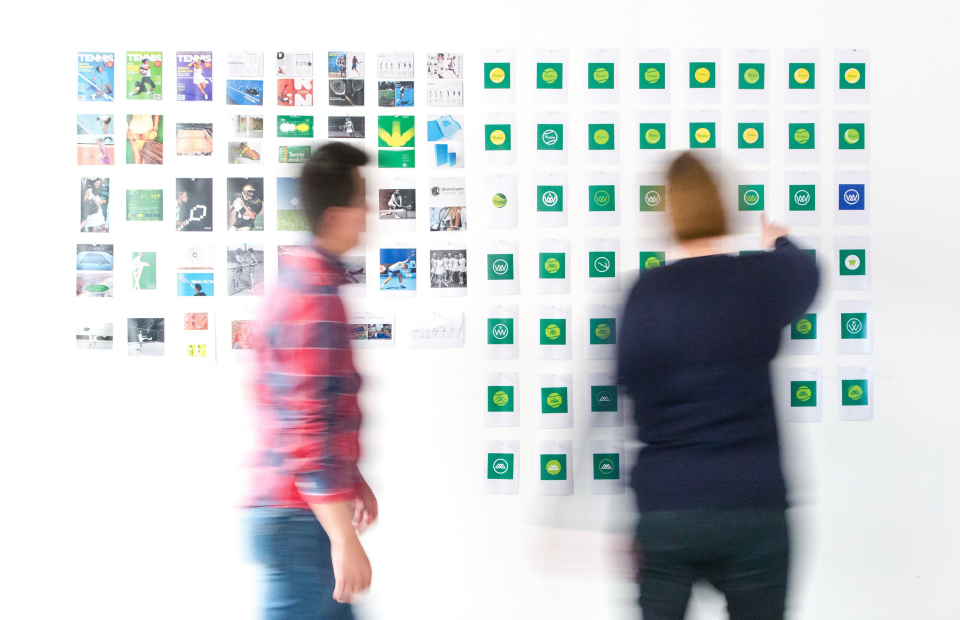
Creative territories are explored. These territories are not one polished idea. They are possible directions that show how the verbal story might appear across logo styles, tone of voice, colour palettes, typefaces, photography, campaign ideas and early applications. They help stakeholders see the future before it is fully designed.
After discussion and feedback, one route is chosen. That route is then developed, refined and expanded. The second presentation normally shows a more complete picture, including stationery, social graphics, campaign ideas and early website concepts. This is where the brand identity starts to feel real.
Once everything is agreed, guidelines are created. These give internal and external teams the clarity they need so the organisation looks and sounds consistent everywhere. Guidelines protect the investment and keep the brand coherent as it grows.
What a visual identity covers
A visual identity is different. It skips the strategic work and focuses purely on how the business looks. Logos, colours, fonts and basic assets are created, but the deeper meaning behind them is not defined.
For some organisations this is perfectly suitable. A new business with a tight budget may need to get into the market quickly. A visual identity helps them look professional and start trading. But without the strategic foundation it is not a long term solution. It is a temporary fix that works until growth demands something more solid.
Deliveroo is a good example. The original kangaroo logo was practical and memorable, but it could only take the business so far. Once the company grew, it needed a brand identity that matched its ambitions. The same happened with Airbnb. Neither company would be where it is today without investing in deep brand work.
Your organisation may not be Deliveroo or Airbnb, but the principle is the same. A visual identity gets you in the game. A brand identity helps you win it.
The simple distinction
A visual identity is the surface. A brand identity is the structure. One helps you launch. The other helps you grow.
If you understand what stage your organisation is currently in, choosing the right approach becomes much easier. Both options have value, but they serve different needs and produce different outcomes.
Thank you for reading. If you would like support deciding which approach is right for your organisation, I can help you explore the options and move forward with clarity.